The Hallway as a Room, Not Just a Route
Hallway design starts with what your entrance already offers: use thresholds, storage and sightlines to give this small space a distinct, useful character.
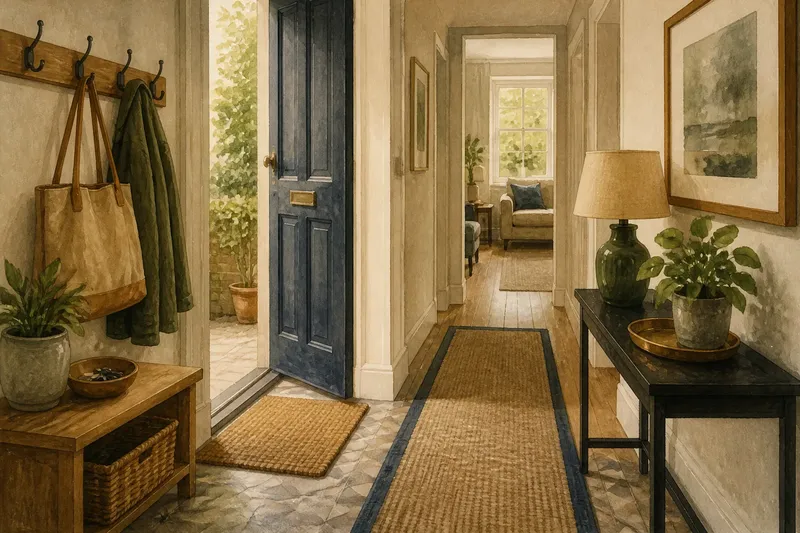
You come in with a bag slipping off one shoulder, and the hallway decides what happens next: shoes land by the door, a coat finds a hook, or everything travels further into the house. Hallway design begins with noticing this ordinary choreography. The entrance can feel like a small room with its own purpose, rather than a strip of floor between other rooms.
Where does the entrance actually begin?
A front door is an obvious marker, but the entrance may begin earlier or end later. A change in floor finish, a shallow recess, a turn in the wall or the first view into the living room can all signal a threshold. Notice where you naturally pause, turn or put something down; those movements reveal the space’s real boundaries.
Some homes have no separate lobby. In that case, a rug, a narrow shelf or a change in wall colour can suggest an arrival zone without pretending there is a room where there is only a passage. Keep the cue aligned with the architecture: a floor runner can define a route, while a small tray can mark a landing place.
Look at the doorway from both sides. A threshold should help someone arriving understand where to go, while remaining comfortable to cross with shopping or a pram. If a rug edge curls or catches a door, it is marking the space badly; choose a flatter option or let the floor itself do the work.
What can the hallway already hold?
Before adding furniture, inspect the overlooked features: the back of a door, a deep window reveal, an alcove, a wide sill or the wall beside a radiator. These may already provide places to hang, rest or tuck away everyday things. A row of sturdy hooks can use vertical space where a cabinet would pinch the route.
Storage works best when it matches the objects that actually arrive. Count the coats in regular use, notice where shoes gather and identify the small items that repeatedly migrate, such as keys or dog leads. A bowl on a shelf may suit keys; a lidded basket may contain scarves without making the entrance feel like a display of errands.
Imagine a narrow entrance where bags end up on the floor beside the door. If a clear patch of wall sits within easy reach, adding a short hook rail there could lift the bags out of the walking line; the visible result would be a floor that is easier to cross and sweep. If that patch is too close to a door swing, a shelf or hook elsewhere may make more sense.
Do not treat every spare corner as a storage opportunity. A hallway needs room for a person to turn, take off a coat and pass someone else. A basket that neatly contains gloves is less helpful if it makes the doorway feel like a squeeze.
How do sightlines give it a room-like character?
Stand at the entrance and notice what the eye meets first. A view straight through to a bright window can make the route feel open; a blank wall close to the door can make it feel abrupt. Neither is automatically a problem. The useful question is whether the first view feels intentional and whether it helps you orient yourself.
A mirror can catch light and offer a last glance before leaving, but it need not be the default answer to a bare wall. A framed print, a small lamp on a console or a plant suited to the available light can give the entrance a point of attention. Keep the object scaled to the passage, so its presence does not compete with the practical path.
Lighting also shapes the threshold. A single ceiling fitting may leave the corner where keys sit in shadow, while a wall light or table lamp can make that task easier and give the entrance a gentler evening character. Choose fittings and placement with the existing installation in mind; electrical work belongs with a qualified professional.
Which hallway details are worth noticing?
How can I make a narrow hallway feel less like a tunnel?
Keep the central route visually clear, and use a few deliberate cues rather than a line of small objects on both walls. A runner, a well-placed picture or a wall light can give the eye a rhythm without adding obstacles.
Should hallway storage be open or closed?
Open hooks make frequently used coats easy to reach, while a cupboard or basket hides visual clutter. Many entrances benefit from a mix: visible space for the current essentials and concealed storage for less-used items.
What can I do if the front door opens straight into a living room?
Use a compact cue such as a mat, a low shelf or a change in lighting to distinguish the arrival area. A tall screen may create privacy, but only if it leaves the doorway and main route comfortable to use.
How can I tell if a hallway is too crowded?
Notice whether the door opens freely, whether two people can pass without awkward shuffling and whether everyday items have a clear place to land. If an object repeatedly gets moved just to reach another room, it may be taking more space than it earns.
How can the entrance feel connected to the rest of the home?
A hallway has its own job, but it does not need a wholly separate visual language. Repeat a material or colour already present nearby: timber from a living-room shelf, a shade found in a kitchen textile, or a metal finish used on door handles. A restrained link helps the entrance feel considered without turning it into a miniature version of another room.
Flooring deserves particular attention because it carries both the visual transition and the daily traffic. Existing tile, timber or resilient flooring may already define the entrance; a removable mat can add a softer landing without imposing a new boundary. Where a finish changes, notice whether the joint feels comfortable underfoot and whether it suits the way doors open.
Hallway design is often less about adding a statement piece than assigning a clear role to what is already there. Notice the pause at the door, the wall that can take a hook and the view that greets you on arrival. A few well-placed cues can make the entrance feel like a room in its own right, while leaving the route through the home easy to read.