The Feature Wall Cannot Fix a Room Layout
A feature wall cannot fix a room layout, but tracing routes and arranging existing furniture can reveal what to change before you decorate.
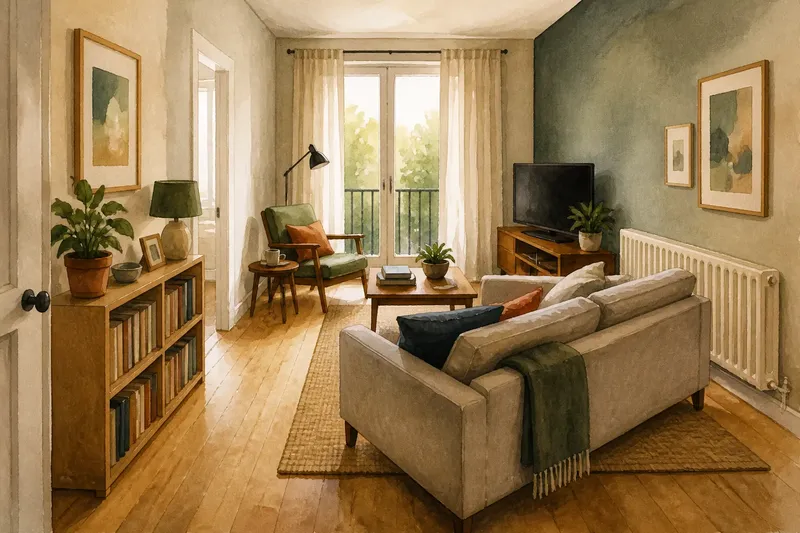
The sofa blocks the door to the balcony, and the television is the first thing you see from the hall. In this invented situation, a dramatic painted wall seems like an easy rescue. But a feature wall cannot fix a room layout: the trouble is where people walk, sit and look, not a shortage of colour.
Imagine a narrow living room with a door at one end, a balcony at the other and a radiator beneath the only long wall. The owners have a three-seat sofa, a low bookcase, a television and an armchair inherited from a relative. Rather than buy new furniture or reach for wallpaper, they start by noticing how the room is used. That small change in attention gives them a workable route from diagnosis to a more settled arrangement.
What is making the room feel awkward?
The sofa sits opposite the television, as if the room had been arranged around a single viewing position. Its back narrows the path between the hall and balcony, while the armchair, angled towards the screen, leaves little room to turn into the seating area. The bookcase is beside the balcony door, so reaching for a book also means stepping into the traffic lane.
A patterned wall behind the television might make that end look deliberate, but it would leave every obstruction in place. The useful question is not “Which wall needs character?” but “Where does the room ask us to go, and what gets in the way?”
In the imagined room, the owners watch television, read, talk with guests and carry laundry through to the balcony. These activities create different demands. A layout that works only when everyone faces the screen is unlikely to feel comfortable during conversation or when someone needs to pass through.
Where do people need to walk?
They begin with movement, not decoration. One person walks the usual routes while the other watches where they hesitate, turn sideways or reach around furniture. They trace the journey from hall to balcony, then from the sofa to the bookcase and from the seating area to the door.
Nothing needs to be measured or marked with elaborate plans at this stage. A length of masking tape on the floor can suggest a proposed furniture edge, and a few minutes of ordinary movement can show whether the route feels pinched. Keep the tape away from delicate flooring and remove it according to its maker’s directions.
The first change is simple: the bookcase moves from beside the balcony door to a short wall near the hall. The route opens up, and books are still reachable from the seating area. The sofa remains where it is for now, because moving several pieces at once would make it harder to tell which change helped.
That is the first lesson from the invented room: protect the path people actually use before deciding which wall deserves attention. A clear route can make the room feel more composed even before a cushion shifts.
What should the room ask you to look at?
With the route clearer, the owners consider the room’s focal points. A focal point is simply the place the eye tends to settle: a window, a fireplace, a view, a television or a piece of art. It does not have to be a decorated wall, and one room can have more than one focus when its activities support them.
Here, the balcony doors bring in daylight and offer a view of trees. The television matters too, but it need not dominate the first glance from the hall. The owners turn the sofa slightly towards the window and leave the television on its existing stand. From the sofa, both remain visible; from the doorway, the room now opens towards the light.
This adjustment changes the relationship between the furniture and the room without asking for a new centrepiece. The armchair can now face the sofa at a conversational angle rather than pointing directly at the screen. A small side table fits beside it, giving a reader somewhere to put a cup without blocking the route.
A feature wall can help a focal point read clearly once the arrangement makes sense. It cannot decide which activity deserves attention, nor can it make a poorly placed screen easier to watch. Sort out the sightlines first; choose a finish afterwards.
Can the furniture you own work differently?
Before replacing anything, the owners examine the pieces already in the room. The sofa is long but not deep, the bookcase is low enough to sit beneath a window, and the armchair is bulky from the front but narrow at the sides. These details suggest more than one possible arrangement.
They try the sofa against the short wall, then sit in it and look towards the television and balcony. The room feels less like a corridor, but the television is awkward to see. They return the sofa to its original wall and test a modest shift towards the window instead. This version keeps the screen in view and leaves a more direct passage behind the seating.
The armchair moves closer to the sofa, with its back angled away from the route to the balcony. The bookcase stays near the hall, where its shallow depth does not obstruct the entrance. The owners keep a lamp beside the chair rather than in a corner that would be difficult to reach.
These are not universal placements. A room’s doors, windows, radiators and everyday habits will change what works. The useful principle is to test existing pieces in relation to one another before treating a new wall finish as the answer.
How can you test a layout before decorating?
The owners leave the paint tin closed and live with the revised arrangement for several ordinary evenings. They notice whether someone can reach the balcony while another person reads, whether conversation feels natural, and whether the television can be watched without twisting in the seat. If a piece keeps catching a route, they move that piece rather than adding a decorative distraction.
Say the armchair still makes the passage feel cramped. In this invented situation, the owners slide it closer to the window and turn it towards the sofa; the expected observable result is a more open walkway and an easier angle for conversation. If the chair then blocks the view or feels too far from the lamp, they can try another position before committing to a wall treatment.
A short trial also reveals what the room does not need. Perhaps the television wall already feels balanced once the sofa faces it at a comfortable angle. Or perhaps the long wall looks empty because the bookcase has moved, in which case a framed print or a floor lamp may provide enough presence without a strong colour contrast.
When the arrangement feels settled, the owners choose a muted green for the wall behind the bookcase, not as a cure but as a quiet backdrop for the books. The finish supports a zone that already works. It does not conceal a blocked door, compensate for an awkward seat or dictate how the room must be used.
What questions help before choosing a feature wall?
Should the feature wall go behind the sofa?
Not automatically. First check whether that wall is where people sit, look or gather; a strong finish behind a sofa can add emphasis, but it cannot improve an uncomfortable route or a poor viewing angle.
Can colour make a small room feel larger?
Colour changes how surfaces relate visually, but it cannot create floor space or shift a doorway. Consider the room’s light and the effect you want, then judge samples in the actual space rather than relying on a dramatic photograph.
Is wallpaper a good way to disguise awkward furniture?
Wallpaper may draw attention towards or away from a surface, but it will not make a bulky chair easier to pass. Try changing the furniture position first, then decide whether a patterned wall adds something the layout still needs.
What if the television has to stay in its current place?
Arrange the seating around a comfortable view while keeping the main route open. If the screen’s position limits the room, treat that as a design constraint and see how the other pieces can respond before decorating around it.
What did the room teach its owners?
In the invented case, the room becomes easier to use through a sequence of modest decisions: move the bookcase out of the doorway’s path, turn the armchair towards conversation, and adjust the sofa without losing sight of the television. The result is not a dramatic transformation. It is a room where the route, seating and view stop competing with one another.
That is the value of postponing a feature wall. When the layout works, a bold finish can reinforce a focal point or give a seating area its own character. When it does not, the finish may simply make the underlying problem more noticeable.
Before choosing a paint colour or wallpaper, walk the route from the entrance to the room’s far side, sit in each seat and look at what naturally draws your eye. For a feature wall to earn its place, it should support those everyday movements and views—not be asked to solve what the furniture is still getting wrong.